FLYING AFTER RHINOPLASTY BANGKOK: TIMING AND CABIN RULES
How many days after rhinoplasty in Bangkok the flight home is safe, what cabin pressure does to a fresh nose, and when business class matters.
By Roy Selbach
Rhinoplasty tourists keep asking the same thing before they book Bangkok. They want to know how many days after surgery the flight home is safe. The honest answer is seven to ten days for a straightforward primary rhinoplasty, twelve to fourteen for a revision, and up to three weeks for rib cartilage cases, with the surgeon holding final sign-off. Bangkok clinics see this question constantly because most of their rhinoplasty patients fly in from Singapore, Jakarta, Dubai, Sydney, and London, and the return ticket shapes the recovery plan. This guide covers the physics of cabin pressure on a freshly operated nose, the standard clearance timeline, what a fit-to-fly letter looks like, and when the business-class upgrade is worth the money.
WHY CABIN PRESSURE MATTERS AFTER A BANGKOK RHINOPLASTY
Commercial jets pressurise the cabin to roughly the equivalent of 2,000 to 2,400 metres of altitude, not sea level. That drop in ambient pressure makes gases inside the body expand by about 25 percent, which is why ears pop and sinuses ache on descent. A freshly rhinoplastied nose is full of swelling, tiny blood vessels, splints, and sometimes internal packing, and that tissue bed does not love expansion. Early flying increases the risk of nosebleeds, pressure headaches concentrated over the bridge, and in rare cases disruption of the newly set cartilage framework. None of this is dramatic enough to ruin a result on day eight, but on day two it is a real concern.
The second issue is dry air. Cabin humidity sits around ten to twenty percent, less than most deserts, and nasal mucosa heals badly in that environment. Crusting worsens, scabs pull off early, and the drainage from recent osteotomies gets sticky and uncomfortable. For patients who had open rhinoplasty with an external columellar stitch, the dryness also makes the scar itchy enough to tempt touching, which is the single fastest way to introduce infection.
THE SEVEN TO TEN DAY RULE MOST BANGKOK SURGEONS QUOTE
The informal standard across Bangkok plastic-surgery clinics, including those profiled in the Bangkok rhinoplasty cost guide, is to clear primary rhinoplasty patients to fly on day seven. That lines up with external cast removal, suture removal for open cases, and the first point at which peri-orbital bruising has faded enough that airport staff will not file an incident report. Day ten is the conservative version of the same rule, used for patients who had concurrent septoplasty, turbinate reduction, or alar base resection.
Revision rhinoplasty and rib-cartilage primaries sit on a longer clock. Revisions involve more scar tissue and more unpredictable bleeding, so most Bangkok surgeons quote twelve to fourteen days before long-haul flying. Rib-cartilage cases carry a small risk of pneumothorax from the donor site and are routinely held to fourteen to twenty-one days with a chest X-ray on the fit-to-fly day. Two-jaw and major contouring patients should ignore this rhinoplasty timeline entirely, since those recoveries run three to four weeks minimum.
WHAT YOUR SURGEON CHECKS BEFORE CLEARING YOU TO FLY
- 01Peri-orbital bruising has moved from purple to yellow-green and is cosmetically concealable.
- 02External cast or thermoplastic splint has been removed and the bridge is stable.
- 03Internal splints or packing are out and no fresh bleeding on gentle insufflation.
- 04Columellar sutures are clean, dry, and removed if open rhinoplasty was performed.
- 05No fever, no spreading cellulitis, no unilateral swelling that suggests haematoma.
- 06For rib-cartilage cases, a repeat chest X-ray rules out late pneumothorax.
- 07Blood pressure is stable and the patient has walked a full lap of the clinic without dizziness.
Bangkok clinics that work with international patients run this exact checklist as the day-seven review. Bangkok Plastic Surgery does it at the clinic in Din Daeng with Dr. Pichet Rodchareon before issuing the fit-to-fly letter, and the hospital surgical teams such as those profiled in the Meko International Hospital review follow a similar protocol. If any line item fails, the standard move is to extend the hotel booking by two or three nights rather than gamble on the flight.
SHORT-HAUL VERSUS LONG-HAUL CHANGES THE MATH
A 90-minute Bangkok to Singapore hop is biologically different from a 12-hour Bangkok to London flight, even though both are pressurised cabins. Short-haul routes to Singapore, Hong Kong, Kuala Lumpur, Jakarta, and Ho Chi Minh City add roughly thirty minutes of climb-descent pressure stress on either end and little else. Dubai, Doha, and Sydney sit in the six to nine hour band and require more active hydration, decongestant timing, and seat-angle planning. London, Toronto, and Melbourne push past twelve hours and effectively force business-class consideration for anyone who wants to keep the surgical result crisp.
The Thai airport departure process also factors in. Suvarnabhumi and Don Mueang both have long jet bridges and cold air-conditioning at the gate, which matters because sudden temperature drops trigger vasoconstriction and more swelling. Patients travelling solo should budget for a wheelchair request through the airline so they are not dragging carry-on luggage with a seven-day-old nose.
WHEN BUSINESS CLASS EARNS ITS TICKET
For flights under four hours, economy is fine as long as you have a window seat, aisle access on the other side, and an empty middle neighbour where possible. For anything above six hours, business or at least premium economy starts to pay off for three specific reasons. The flat or near-flat bed keeps the head above the heart during sleep, which cuts swelling. The humidity in a 1-2-1 cabin is usually a few points higher because of lower passenger density per volume. The food is softer and easier to chew with a stiff upper lip, and the amenity kit typically includes a saline spray and eye mask that you would otherwise pack yourself.
The carriers that medical tourists tend to use, Thai Airways, EVA, Singapore Airlines, Qatar, and Emirates, all allow airline-provided fit-to-fly letters to be lodged at check-in without extra paperwork. Business-class upgrades on points, if you have them banked, are worth burning on the post-op leg specifically rather than the inbound flight to Bangkok.
PACKING A NOSE-SAFE RETURN-FLIGHT CARRY-ON
- 01Saline nasal spray, two bottles, since security may confiscate one.
- 02Soft-sided travel pillow that supports the neck without pressing on the nose bridge.
- 03Sunglasses dark enough to cover any remaining bruising without pressing on the nasal bones.
- 04A copy of the fit-to-fly letter and the surgical report, printed, in case the gate agent asks.
- 05Prescribed oral antibiotics and pain medication in original packaging, in the carry-on not the checked bag.
- 06A silk or satin pillowcase for the hotel the night before the flight, because it reduces overnight swelling.
- 07Electrolyte sachets to mix with cabin water, since dehydration amplifies swelling and bleeding risk.
Patients who booked through a clinic with a concierge, such as the operators in the Ari and Phaya Thai district guide, often get this kit packed for them. Solo bookings should assemble the list the day before the flight and keep it within arm's reach once seated.
WHAT TO DO MID-FLIGHT IF YOUR NOSE THROBS AT 35,000 FEET
Mild aching over the bridge during cruise is normal and not a sign of damage. The usual script is paracetamol 500 to 1,000 milligrams, a 20-minute cold compress using the ice bag from the galley wrapped in a napkin, and head elevation to roughly 30 degrees. Avoid ibuprofen in the first ten days because it increases bleeding risk. Avoid anything with pseudoephedrine unless the surgeon prescribed it, because it can spike blood pressure in a dehydrated patient.
Active bleeding is a different category. Lean forward, not back, pinch the soft part of the nose below the bridge for ten minutes without checking, and ask the cabin crew for the onboard medical kit. All long-haul aircraft from Bangkok carry adrenaline-soaked gauze and a basic ENT kit, and crew will coordinate a radio consult with MedAire or similar. Bleeds that stop within twenty minutes do not require a diversion. Bleeds that continue past thirty minutes are the reason surgeons prefer day ten over day seven for high-risk cases.
HOW BANGKOK RHINOPLASTY TIMING VARIES BY TECHNIQUE
Closed rhinoplasty with silicone implant only sits at the shortest end of the recovery curve, with many Bangkok surgeons clearing patients at day five to seven for short-haul flights under three hours. Open rhinoplasty with ear cartilage tip grafting, the more common Bangkok default, lands squarely in the seven to ten day window. Revision work extends to twelve to fourteen days once you factor in scar tissue and more variable bleeding. Rib cartilage pushes the window to fourteen to twenty-one days and adds a chest X-ray requirement. Patients cross-shopping techniques should read the Bangkok consultation checklist and the trip-budget planner before locking dates, since a Bangkok rhinoplasty with a built-in recovery hotel often lands cheaper than booking a shorter stay and gambling on an airline change-fee.
HOW SOON AFTER RHINOPLASTY IN BANGKOK CAN I FLY HOME?
Primary rhinoplasty patients are usually cleared on day seven if the cast has come off, bruising is manageable, and no internal packing remains. Day ten is the conservative default and the one most Bangkok surgeons recommend for long-haul flights over eight hours. Revision cases need twelve to fourteen days. Rib-cartilage cases need fourteen to twenty-one days with a clean chest X-ray before boarding.
DOES CABIN PRESSURE ACTUALLY DAMAGE A HEALING NOSE?
Cabin pressure will not undo a properly set rhinoplasty, but it can trigger nosebleeds and swelling in the first week because gases in the sinuses expand on ascent and contract on descent. The practical risk is not structural, it is discomfort and bleeding. By day seven the mucosa is sealed enough that the risk drops close to baseline, which is why the seven day rule exists in the first place.
SHOULD I WEAR A FACE MASK ON THE PLANE AFTER RHINOPLASTY?
A soft surgical mask is fine and even helpful because it traps exhaled moisture and reduces mucosal drying. Avoid N95 or KF94 masks because the tight seal presses on the nasal bones. If bruising is still visible, a mask also handles the cosmetic question without needing a second set of sunglasses.
CAN I FLY ECONOMY AFTER BANGKOK RHINOPLASTY IF I CANNOT AFFORD BUSINESS CLASS?
Yes, and thousands of patients do, every month. Pick a window seat for head control, hydrate aggressively, use the saline spray every hour, and keep the head elevated with a travel pillow. For flights under six hours, economy is the default choice even for Bangkok surgeons themselves. For flights over ten hours, premium economy is a reasonable middle option if business class is out of reach.
WHEN CAN I FLY IF I HAD REVISION OR RIB CARTILAGE RHINOPLASTY IN BANGKOK?
Revision rhinoplasty with ear cartilage is typically cleared at day twelve to fourteen. Rib-cartilage rhinoplasty adds a chest X-ray requirement and extends the hold to fourteen to twenty-one days. Dr. Pichet at Bangkok Plastic Surgery, and the surgical teams at other Bangkok plastic-surgery hospitals, will not sign a fit-to-fly letter for rib cases earlier than fourteen days without an imaging check.
WILL THE CLINIC GIVE ME A FIT-TO-FLY LETTER?
Reputable Bangkok plastic-surgery clinics issue a fit-to-fly letter on clinic letterhead, signed by the operating surgeon, that states the procedure date, the all-clear date, and any medication restrictions. Airlines will accept this document at the gate in English without needing a translated Thai copy. If the clinic hesitates to produce one, that is a warning sign worth taking seriously before you hand over the final payment.
Answer a one-minute quiz and see four plastic-surgery clinics matched to your procedure and budget.
How-to · 6 min · Nov 3, 2026
← all posts
V SQUARE CLINIC WESTGATE REVIEW 2026: PRICES, VERDICT
V Square Clinic at Central Westgate reviewed in English: 2026 laser, Rejuran and injectable prices, named doctors, and when to make the trip.
BEST VALUE BANGKOK DENTAL IMPLANT CLINICS 2026
Five Bangkok dental clinics with verifiable THB implant prices, from Warantec at 15,000 to Straumann BLX at 85,000, ranked for 2026 medical tourists.
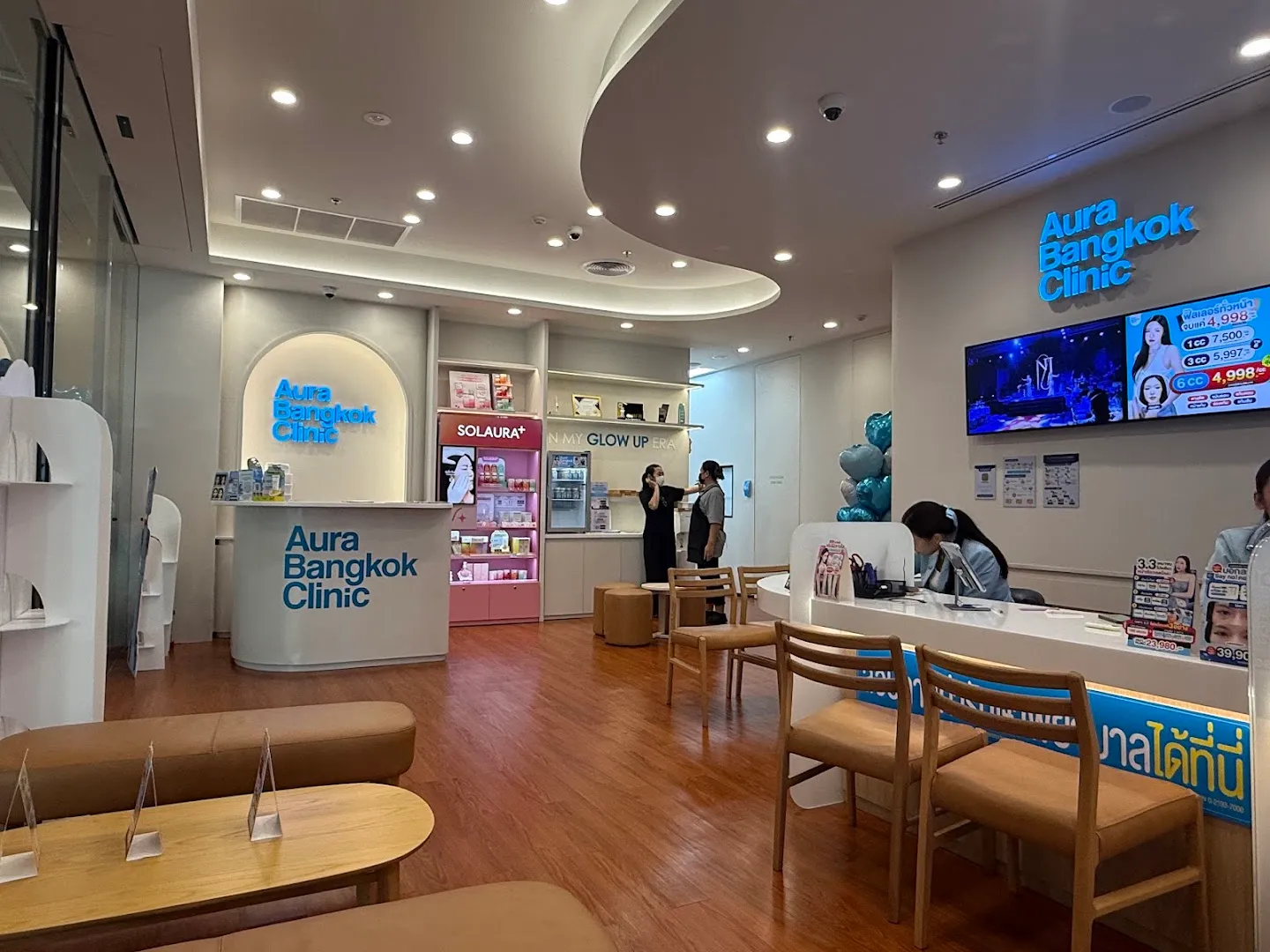
AURA BANGKOK CLINIC REVIEW: PRICES, SERVICE, BRANCHES 2026
Full 2026 review of Aura Bangkok Clinic: real baht prices across botox, HIFU and fillers, service quality, which branch suits your trip.
LAB X BANGKOK PRICE LIST 2026: EVERY BRANCH COMPARED
Real baht prices for Lab X Clinic's Bangkok branches, with Botox, fillers and Ultherapy rates across One Bangkok, Mega Bangna, Promenade and Rama 9.

AESTHETIC CLINICS IN SILOM & SATHORN BANGKOK (2026)
Six aesthetic clinics in Silom and Sathorn compared, with real baht prices for Botox, Ulthera, Rejuran and liposuction. Who to book first in 2026.
▶▶▶ stop reading. start matching.
FIND YOURS.
Answer a one-minute quiz and see four clinics matched to your treatments and budget. Free, no fees.